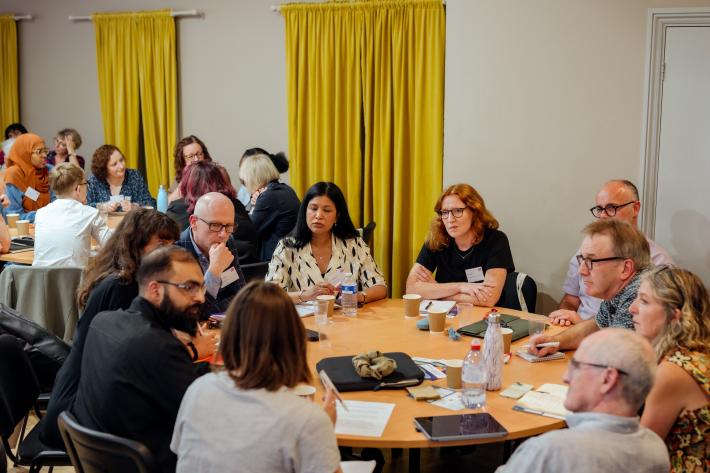
A few months ago, Footwork and Platform Places brought together an unusually useful mix of London councils, funders and GLA teams working on community assets – as part of London Funders’ Festival of Learning.
The starting point was pretty simple: London doesn’t lack buildings. It lacks the infrastructure to get more of those buildings into community hands - and keep them there.
We heard about pioneering Community Asset Developers (CADs) including BD Giving, Stour Trust and Wandsworth Town Property Partnership, who are showing what it looks like to unlock spaces that meet local needs while shifting power and wealth for the long term.
But we also talked about what’s getting in the way. Community Asset Developers need long-term unrestricted funds. Councils need practical routes through the internal barriers to doing things differently. Funders need ways to collaborate and invest in the enabling infrastructure, not just individual buildings or projects.
Our proposal was a ‘London-Wide Web’ for community assets:
Community Asset Developers, funders, councils and the GLA working as a coalition, rather than everyone trying to solve the same problems separately. We are stronger together.
So, what’s happened since?
Encouragingly, the conversation hasn’t stayed in the room. We’ve been continuing discussions about what a London-wide fund for community assets could look like - one that learns from models such as London Propel, which channels funding and decision-making power to community groups. Crucially, any new fund would be co-governed with Community Asset Developers themselves.
We’ve also been building the network of CADs across the capital. On 23rd September, we’re bringing together Community Asset Developers for a dedicated gathering: a chance to connect the people doing this work, surface common needs and barriers, and start shaping what shared infrastructure could look like from their perspective.
And in October, we’ll be taking the conversation to City Hall, sharing what we’re learning and making the case for a more coordinated London-wide approach.
That feels important. Because this isn’t really about creating another initiative or network for its own sake. It’s about building the foundations that make community ownership easier: relationships, finance, knowledge, capacity and political backing.
There’s plenty still to work out. But there’s also growing recognition that community assets shouldn’t have to succeed through heroic effort and happy accidents.
What would it look like if London had an ecosystem designed to help them succeed? That’s the question we’re now trying to answer — together.
Want to be part of the conversation? Connect with Naomi and Bex on LinkedIn and mention the codeword: ‘London-Wide Web’